(+91) 9595750750


Regulatory Affairs in the Pharma is a critical function within the pharmaceutical industry that ensures drugs are safe, effective, and compliant with all applicable laws and regulations before they reach the market. It acts as the bridge between pharmaceutical companies and regulatory authorities, guiding products through complex approval processes and maintaining compliance throughout their lifecycle.
In an industry where patient safety and product quality are paramount, Regulatory Affairs in the Pharma plays a central role in bringing new medicines to market efficiently while adhering to strict global standards.
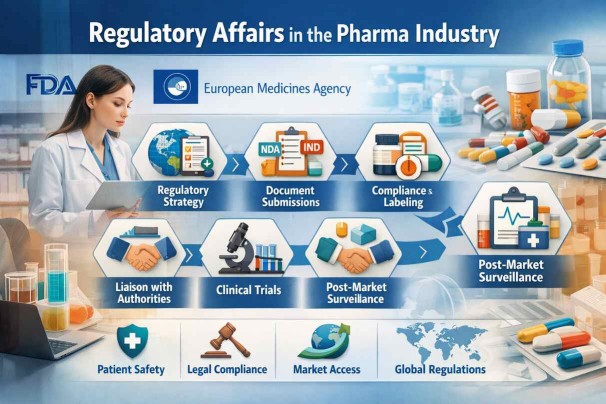
Understanding Regulatory Affairs in Pharma Industry
Regulatory affairs involves the strategic, scientific, and administrative work required to obtain and maintain approval for pharmaceutical products. This includes interacting with regulatory bodies such as the U.S. Food and Drug Administration (FDA), European Medicines Agency (EMA), and other national authorities.
A regulatory affairs professional ensures that a company complies with regulations at every stage of drug development—from research and clinical trials to manufacturing, labeling, and post-market surveillance. Without regulatory affairs, pharmaceutical companies would struggle to navigate the complex legal frameworks that govern drug approval and distribution.
Key Responsibilities of a Regulatory Affairs Professional
A regulatory affairs professional handles a wide range of responsibilities that are essential for the successful launch and maintenance of pharmaceutical products. These include:
1. Regulatory Strategy Development
They develop strategies to ensure that products meet regulatory requirements in different markets. This involves understanding regional regulations and planning submissions accordingly.
2. Submission of Regulatory Documents
Preparing and submitting dossiers such as Investigational New Drug (IND) applications, New Drug Applications (NDA), and Marketing Authorization Applications (MAA) is a core responsibility.
3. Liaison with Regulatory Authorities
A regulatory affairs professional serves as the primary point of contact between the company and regulatory agencies, responding to queries and ensuring smooth communication.
4. Compliance Management
Ensuring that products comply with changing regulations is vital. This includes monitoring updates in laws and implementing necessary changes in processes or documentation.
5. Labeling and Documentation
They oversee product labeling to ensure accuracy, clarity, and compliance with regulatory guidelines.
6. Post-Market Surveillance
Even after approval, regulatory affairs teams monitor product safety and report adverse events, ensuring ongoing compliance.
Importance of Regulatory Affairs in Pharma
Regulatory affairs is essential for several reasons:
1. Patient Safety:
Ensures that only safe and effective drugs reach consumers.
2. Legal Compliance:
Helps companies avoid legal issues, penalties, or product recalls.
3. Market Access:
Facilitates faster approvals and global market entry.
4. Reputation Management:
Maintains the credibility of pharmaceutical companies.
Without a strong regulatory framework, the risks associated with drug development and distribution would significantly increase.
Skills Required to Become a Regulatory Affairs Professional
A successful regulatory affairs professional needs a combination of scientific knowledge, regulatory expertise, and strong communication skills. Key competencies include:
1. Understanding of pharmaceutical regulations and guidelines
2. Attention to detail and analytical thinking
3. Strong written and verbal communication
4. Project management skills
5. Ability to interpret complex legal and scientific information
Additionally, staying updated with evolving global regulations is crucial in this dynamic field.
Career Opportunities in Regulatory Affairs
Regulatory affairs offers diverse career opportunities across the pharmaceutical, biotechnology, and medical device industries. Common roles include:
Regulatory Affairs Associate
Regulatory Affairs Manager
Regulatory Affairs Specialist
Compliance Officer
Regulatory Consultant
With increasing globalization and stricter regulations, the demand for skilled regulatory affairs professionals continues to grow. This makes it a promising career path for individuals interested in both science and policy.
Challenges in Regulatory Affairs
While regulatory affairs is a rewarding field, it comes with its own set of challenges:
1. Constantly evolving regulations across different countries
2. Complex and time-consuming approval processes
3. High level of accountability and precision required
4. Need for cross-functional coordination with R&D, quality, and legal teams
Despite these challenges, the role remains vital in ensuring that life-saving drugs reach patients safely and efficiently.
The Future of Regulatory Affairs
The future of regulatory affairs is being shaped by advancements in technology, globalization, and increased focus on patient-centric approaches. Digital tools, artificial intelligence, and real-world data are transforming how regulatory submissions and monitoring are conducted.
As regulatory environments become more complex, the role of a regulatory affairs professional will continue to evolve, requiring continuous learning and adaptation.
Conclusion
Regulatory affairs is the backbone of the pharmaceutical industry, ensuring that products are developed, tested, and marketed in compliance with strict regulations. A regulatory affairs professional plays a crucial role in safeguarding public health while enabling innovation in medicine.
For those looking to build a career in this field, gaining the right knowledge and practical skills is essential. Enrolling in a regulatory affairs course from a reputed institution like the Global Institute of Regulatory Affairs (GIRA) can provide the expertise, industry insights, and hands-on training needed to excel in this growing and dynamic profession.